
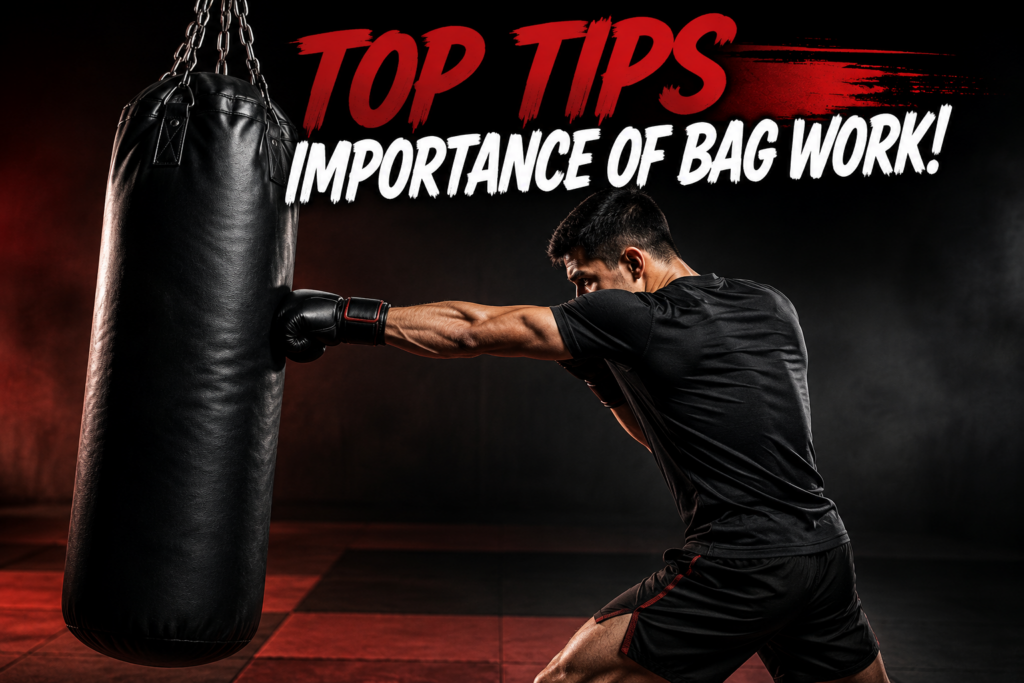
1. Improves Striking Technique
A bag allows you to practice punches, kicks, elbows, and knees repeatedly. Over time, this helps develop:
- Better form and mechanics
- Accuracy and precision
- Timing and rhythm
- Combination flow
2. Builds Power
Because the bag provides resistance, it teaches you how to generate force efficiently from your legs, hips, and core rather than relying only on arm strength.
3. Increases Cardiovascular Fitness
Bag rounds are intense. A few minutes of continuous striking can significantly improve:
- Heart and lung endurance
- Stamina
- Recovery between bursts of effort
4. Develops Muscular Endurance
Repeated striking strengthens many muscle groups, including:
- Shoulders
- Chest
- Back
- Core
- Hips and glutes
- Legs and calves
This helps you maintain technique even when fatigued.
5. Enhances Coordination and Balance
Throwing combinations while moving around the bag improves:
- Hand-eye coordination
- Footwork
- Body awareness
- Balance and agility
6. Burns Calories
Heavy bag training is an effective full-body workout. Depending on intensity and body size, a session can burn a substantial number of calories, making it useful for:
- Weight management
- Fat loss
- Improving overall fitness
7. Improves Bone and Connective Tissue Strength
Progressive impact training can help condition:
- Wrists and forearms
- Shins (in arts that involve kicking)
- Tendons and ligaments
However, this should be done gradually and with proper technique to avoid injury.
8. Relieves Stress
Many people find bag work mentally refreshing. The physical exertion can:
- Reduce tension
- Improve mood
- Increase focus
- Provide a healthy outlet for frustration
9. Builds Confidence
As your skills, fitness, and power improve, you often gain confidence in your abilities and discipline.
10. Allows Safe Solo Practice
Unlike sparring, bag work lets you train alone while refining techniques at your own pace. You can focus on specific weaknesses without the pressure of an opponent.
Tips for Beginners
- Always warm up before training.
- Use hand wraps and appropriate gloves to protect your hands and wrists.
- Focus on technique before power.
- Start with short rounds (for example, 2–3 minutes of work followed by 1 minute of rest).
- If you’re kicking, learn proper technique from a qualified instructor to reduce the risk of injury.
Is bag training enough?
Bag work is excellent, but if your goal is martial arts proficiency, it’s best combined with:
- Pad work
- Technical drills
- Strength and mobility training
- Sparring (when appropriate and supervised)
Together, these elements develop both fitness and practical skill.
Come along for your FREE taster session and allow us to help you build your skills ready to build your future!


