
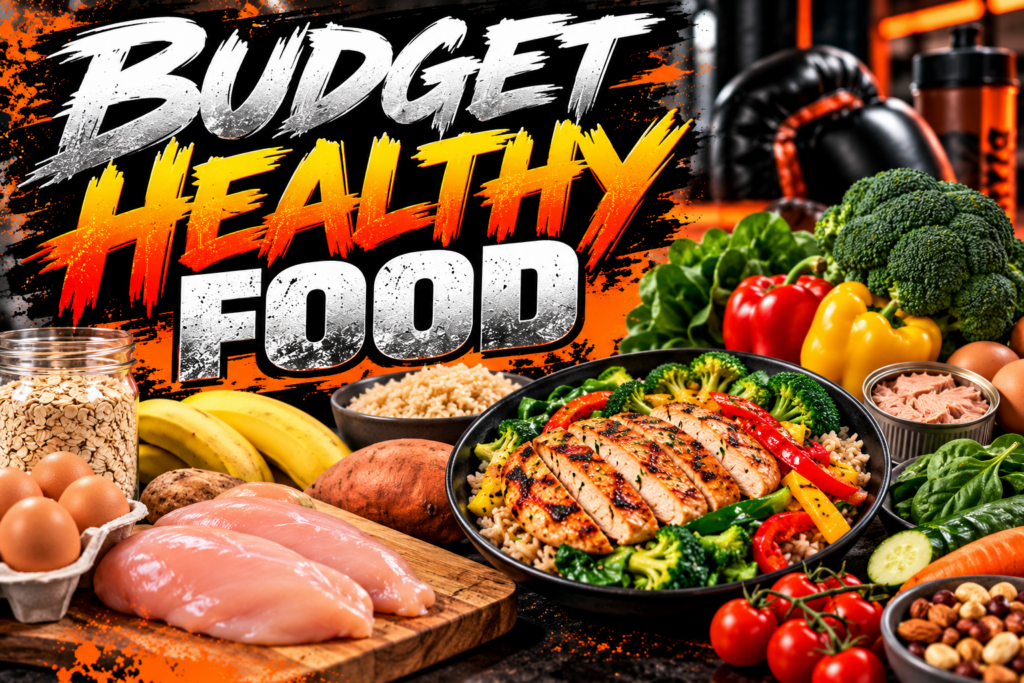
Eating enough protein doesn’t have to be expensive…
The plan gives roughly 175 grams of protein.
It comes to about 2,600 to 2,700 calories.
That’s a solid base for building muscle or tone up.
The meals follow four rules.
They are high in protein, full of fruit and vegetables, filling and easy to cook.
Here’s what a day looks like.
Breakfast is porridge made with 120 grams of oats and water.
It’s served with 300 grams of low fat Greek yogurt, an apple and cinnamon.
That’s about 700 calories and 40 grams of protein.
The morning snack is a tin of tuna on two rice cakes.
Add a little low fat mayo and chives.
That’s about 300 calories and 30 grams of protein.
Lunch is four large eggs, mozzarella and a pear.
That’s about 500 calories and 34 grams of protein.
Dinner is a mince and bean chili with a sweet potato.
It uses 215 grams of ground beef, half a can of kidney beans and half a can of tomatoes.
Add four carrots and two onions.
That’s about 820 calories and 48 grams of protein.
The evening snack is low fat greek yogurt with banana and cinnamon.
That’s about 270 calories and 25 grams of protein.
Add it up and you get about 175 grams of protein.
Here’s why it works.
The ingredients are simple and cheap.
Eggs, oats, yogurt, tuna and ground beef are budget protein sources.
Fruit and vegetables add fiber and micronutrients.
Beans add protein and fiber too.
High volume foods help you feel full.
That helps if you are managing hunger.
Batch cooking the chili saves time.
It also stops takeout temptation after a hard session.
Research suggests active people building muscle may aim for 1.6 to 2.2 grams of protein per kilogram.
For an 80 kilogram man, that’s about 128 to 176 grams of protein.
You may not need that much.
Many people do well with the lower end of the range.
Eating more protein than you need doesn’t add extra muscle.
Total calories and training matter just as much.
If you are a smaller person, scale portions down.
Swap oats and omelet if you are at an office without a stove.
Add protein powder to yogurt for extra protein.
Add nuts or seeds if you can afford them.
Add peppers or mushrooms to eggs for variety.
Prices vary by store and region.
Frozen vegetables are cheap and nutritious.
Canned fish and beans are budget friendly.
Buy in bulk when you can.
Plan your meals before you shop.
A plan only works if you stick with it.
Pick meals you actually enjoy.
Rotate in new recipes so you don’t get bored.
Come along for your FREE taster session and allow us to help you build your skills ready to build your future!


